
Dove l’AI ascolta,
la salute fa un passo avanti


UNICORN Apulia sta ridefinendo la sanità grazie all’Intelligenza Artificiale.
Automatizziamo prenotazioni, referti e diagnosi ecografiche, 24 ore su 24. Senza app, senza download, senza complicazioni. Intelligente. Semplice. Sicuro. Per le cliniche e per i pazienti.
Intelligente. Semplice. Sicuro.
Per le cliniche e per i pazienti.
Progettata per le cliniche moderne: accesso più semplice, 85% di back-office e segreteria in meno, a misura di persona.
-
Prenota esami con un semplice messaggio informale
-
Controlla lo stato dei referti in tempo reale
-
Ricorda gli appuntamenti già programmati
-
Gestisce le modifiche e disdette con supporto guidato
-
Fornisce dettagli tecnici e costi degli esami
-
Parla la lingua del paziente con traduzione automatica in 58 lingue diverse


Piattaforma all-in-one per la gestione sanitaria.
- Gestisce prenotazioni,
- accettazioni,
- referti medici e promemoria,
in modo rapido, affidabile e connesso al Fascicolo Sanitario Elettronico.

Trasforma l’ecografia in uno strumento diagnostico potente.
USE utilizza l’intelligenza artificiale per rilevare la steatosi epatica in meno di 10 secondi da una singola immagine ecografica.
È preciso, veloce e non invasivo — progettato per supportare la diagnosi precoce e migliorare gli esiti clinici, senza alcuno sforzo aggiuntivo per l’operatore.

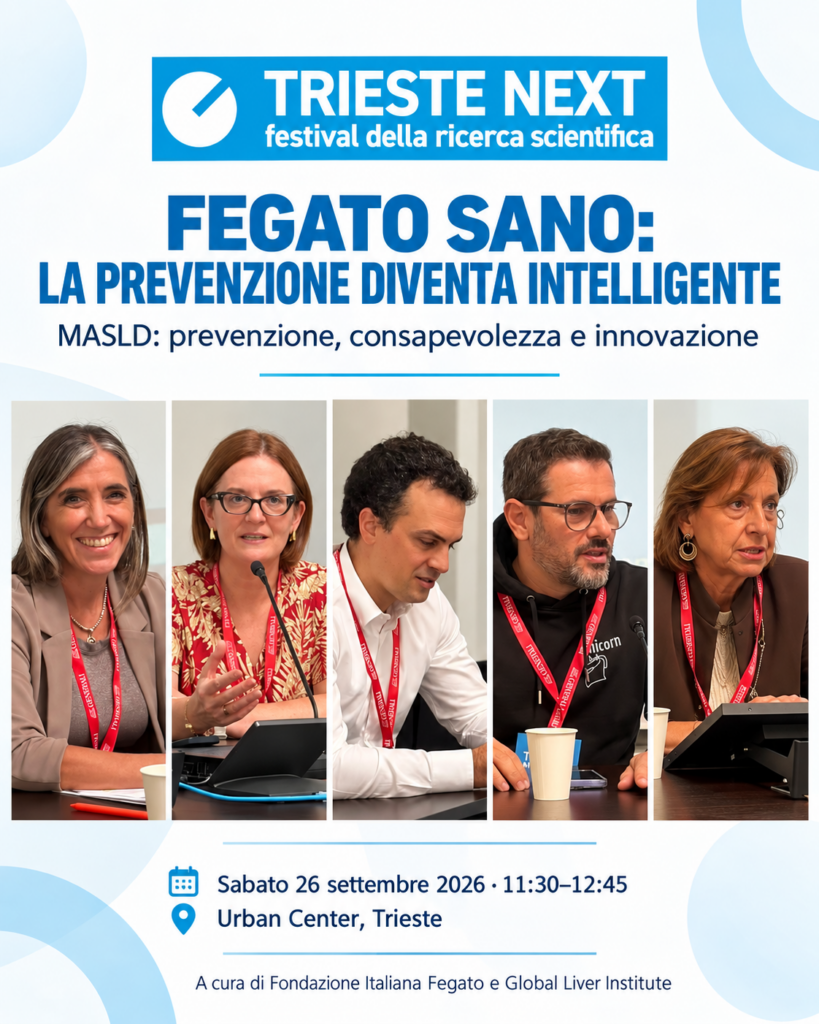
Trieste Next – Fegato sano: la prevenzione diventa intelligente
Trieste Next – Fegato sano: la prevenzione diventa intelligente
Read More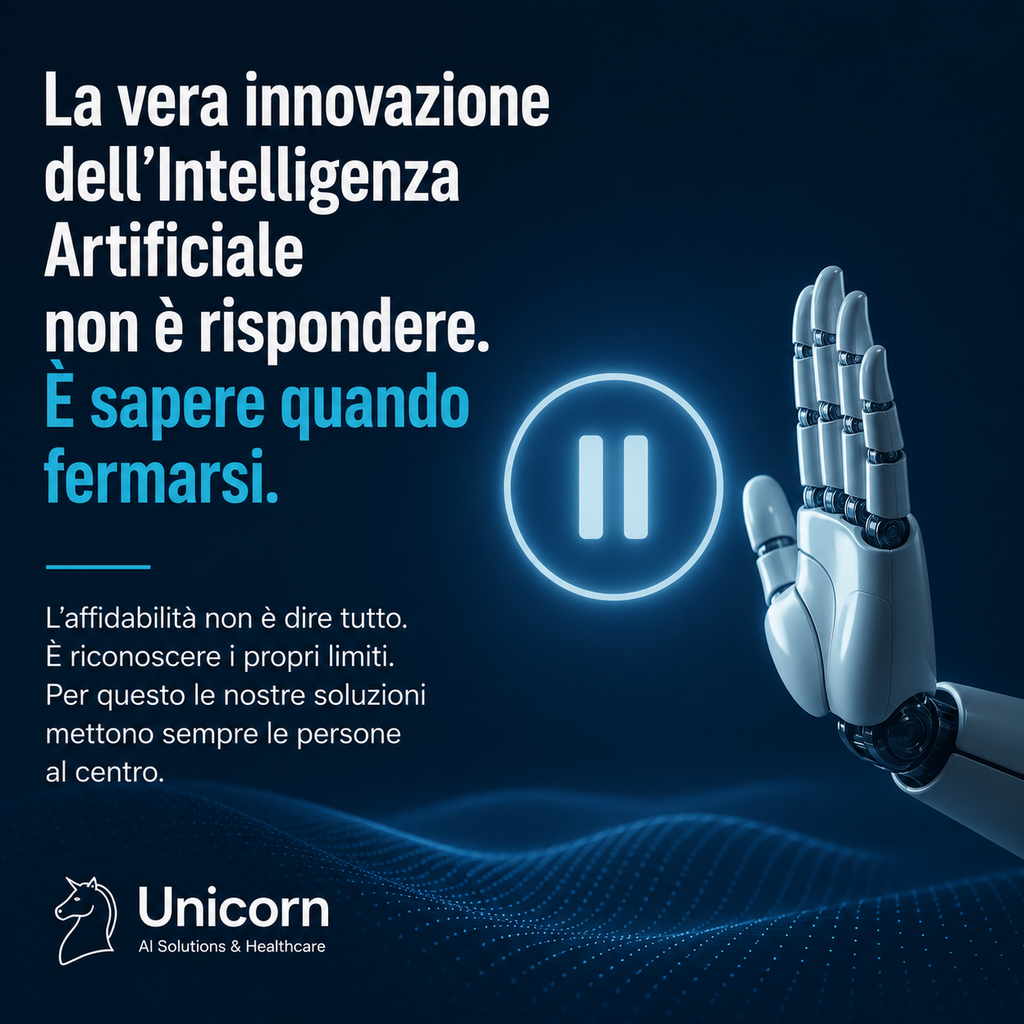
La vera innovazione dell’Intelligenza Artificiale non è rispondere. È sapere quando fermarsi.
La vera innovazione dell’Intelligenza Artificiale non è rispondere. È sapere quando fermarsi.
Read More
L’Intelligenza Artificiale non è intelligente.
L’Intelligenza Artificiale non è intelligente.
Read More
Competenze rare, visione comune, costruiamo il futuro dell’healthcare.

Sergio is a computer engineer with 20 years of experience in the IT sector. In 2004/2005, he was involved in CAD design of fluid dynamic systems at Veleria Semeraro in Bari. Since 2005, he has been providing strategic and technological consulting at Accenture SpA for insurance and banking clients like Generali SpA, INA-Assitalia, Cattolica Assicurazioni, and telecommunications clients like WIND3. From 2010, he focused on information systems security at AMGAS SpA, now RETE GAS BARI SpA. Between 2010 and 2016, he also provided IT consulting for small businesses in manufacturing, commercial, and medical sectors. In 2016, he joined Eurisko Technology Srl, first as head of IT development and later as head of Research and Development. In 2025, he obtained a PhD in Public Health Medicine and Oncology at University of Bari Aldo Moro on the ECO.MED project, developing technologies and innovative algorithms in clinical and functional ultrasound imaging. During this time, he studied AI in the medical field and co-invented an AI-based algorithm for diagnosing Hepatic Steatosis via ultrasound. He published the experimental results of the USe project in the European Journal of Internal Medicine:

Serena is a Biomedical Engineer with a specialization in Clinical Engineering. She has developed a strong interest in applying IT solutions to clinical and diagnostic challenges, as well as healthcare management. Serena is highly motivated to gain professional experience that will allow her to consolidate and expand her technical and interpersonal skills. Her expertise includes proficiency in FileMaker, MATLAB®, Python, SQL, image processing, deep learning, and simulation software. She is recognized for her problem-solving skills, attention to detail, adaptability, and ability to work effectively in teams.

Is a Junior Biomedical Engineer currently pursuing a Master’s degree. Margherita has developed a strong interest in the application of IT solutions in the biomedical field. She is highly motivated to gain professional experience that will allow her to consolidate and expand her technical and interpersonal skills. Her expertise includes the use of FileMaker, Python and MATLAB®, with a focus on data and image processing. She is recognized for her resilience, proactivity, adaptability, and teamwork.

Roberto is an entrepreneur with over 30 years of experience in the medical sector. He started in 1991 as a sole proprietor providing technical assistance for Fujifilm Italia’s radiology equipment. In 1997, his sole proprietorship evolved into Eurisko Technology Snc, and later into an Srl, acting as a partner and agency for Fujifilm Italia, Hitachi Healthcare, Cardioline, and Villa Sistemi Medicali, providing technical assistance, sales, and training for healthcare personnel. He contributed to the creation of the first RIS/PACS system for the Policlinico of Modena and the ASL of Baggiovara, later working on the CTO of Turin and the initial computerization of the ASP of Potenza, which he concluded as Project Manager. Drawing on his experiences in Healthcare IT, he co-founded a development group within Eurisko Technology with Engineer Santoro, focusing on IT solutions for healthcare. This led to the creation of the “Isaac 4 Healthcare” line, which ranges from simple image archiving to telemedicine in Radiology, fully compliant with GDPR.

Raimondo Catalano leads business development, sales strategy, and client relations. With a strong focus on the healthcare sector, he supports the company’s growth by building strategic partnerships and translating innovative digital solutions into concrete value for healthcare organizations.
Consiglio scientifico
Abbiamo collaborato con l’Università degli Studi di Bari Aldo Moro sulla tecnologia USe, brevettata da Sergio Santoro al 50% insieme a UniBa.

Full Professor of Internal Medicine at the University of Bari “Aldo Moro”, where he heads the Department of Biomedical Sciences and Human Oncology (DIMO) and the Complex Operative Unit of Internal Medicine “Augusto Murri”. He graduated with honors in Medicine and Surgery in Bari, specialized in Internal Medicine at the same University, and later obtained a PhD in Human Pathophysiology from Utrecht University in the Netherlands.
He has held prominent international positions, including the presidency of the European Society for Clinical Investigation (ESCI), and has collaborated with numerous European research centers. He is a Visiting Professor at several foreign universities and is actively involved in medical and specialist training. His scientific output includes over 450 publications in international journals, numerous book chapters, and 6 scientific volumes, with an h-index of 55 on Scopus and 72 on Google Scholar.
His main research areas include lipid metabolism, gastrointestinal tract disorders, hepato-biliary diseases, rare conditions such as familial Mediterranean fever, and non-invasive diagnostic techniques (including breath tests). He actively promotes an innovative, collaborative approach to clinical medicine, with a strong focus on international mobility for young researchers.

Mohamad Khalil is a researcher at the Department of Precision and Regenerative Medicine and the Ionian Area (DiMePReJ) of the University of Bari “Aldo Moro”, within the framework of the PNRR OnFoods project – Research and Innovation Network on Food and Nutrition Sustainability, Safety and Security. As part of this project, he is involved in the development and biofunctional characterization of new foods, with a particular focus on diet and human health.
In 2023, he earned a PhD in Soil and Food Sciences from the same University, with a multidisciplinary background integrating experimental, clinical, and nutritional aspects. His experience includes laboratory work (cell and bacterial cultures, molecular biology, electrophysiological studies using Ussing chambers), clinical research (experimental protocols, data collection, statistical analysis), and teaching activities in doctoral programs and medical specialization schools.
He is the author of over 40 scientific publications in indexed international journals, with an h-index of 13 and more than 740 citations (Scopus data). He is also co-inventor of an international patent for an innovative artificial intelligence-based diagnostic system for the assessment of hepatic steatosis (PCT/IB2023/055793).
Già scelto da chi punta a guidare attraverso l’innovazione. 


Unicorn: so good that they even gave us awards.


